
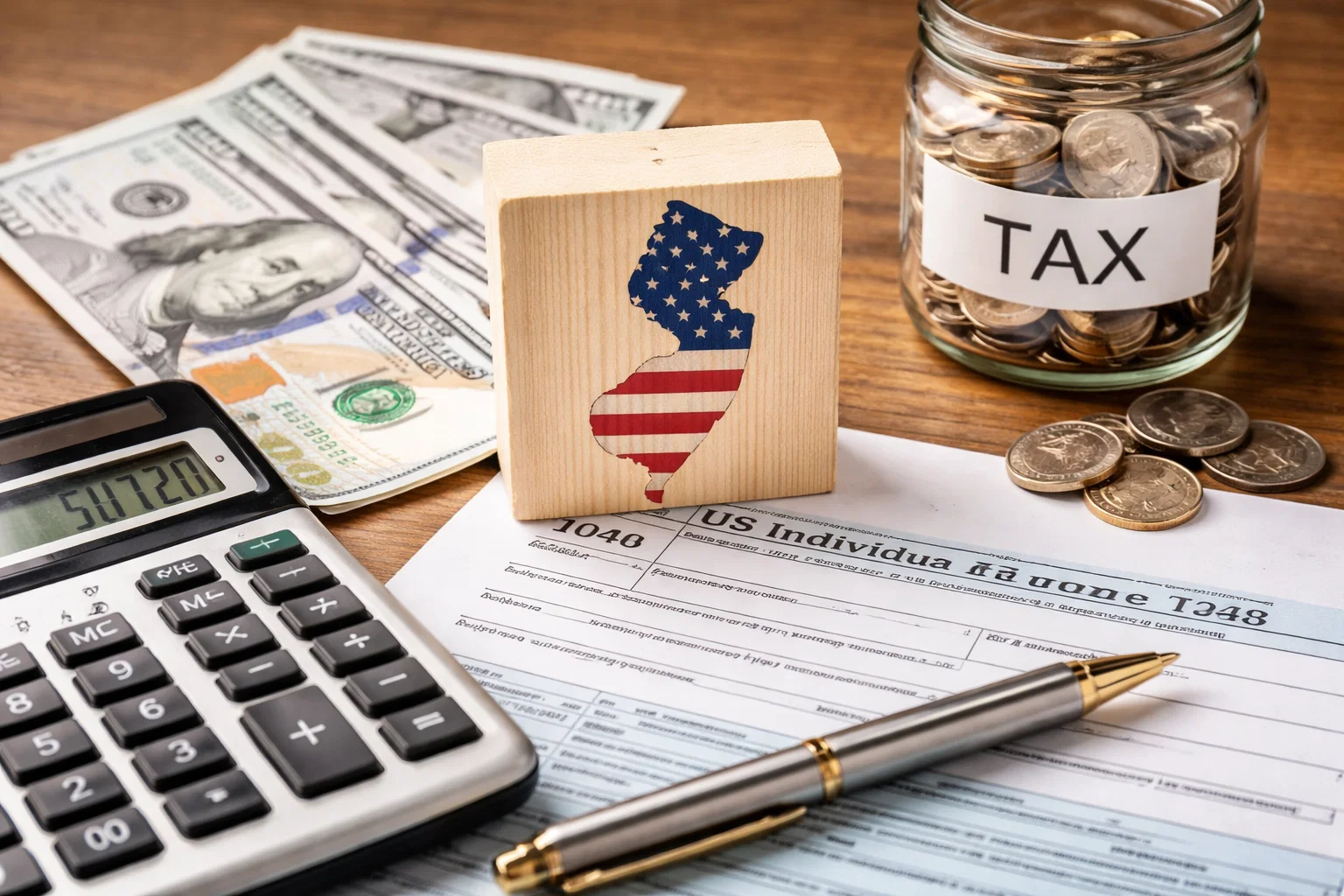
Tax Planning Strategies for Companies: A New Jersey Playbook for Lower Taxes
A New Jersey Playbook for Lower Taxes and Smarter Growth
Whether you're filing late, planning ahead, or have complex financial needs — our experienced CPAs are here to help.

Most companies don’t fail at tax planning because they ignore the rules.
They fail because they treat taxes as an annual task instead of a strategic system.
In New Jersey, where state and federal tax layers collide, reactive tax behavior leads to:
- Chronic overpayment
- Cash-flow pressure
- Missed credits and deductions
- Elevated audit and penalty risk
This expanded guide explains how successful NJ companies use tax planning strategies deliberately, throughout the year, to control tax outcomes instead of accepting them.
By the end of this guide, you will understand:
- How tax planning decisions compound over time
- Which strategies deliver the highest ROI for NJ companies
- Where most businesses unknowingly leak money
- When tax preparation alone is not enough
What Are Tax Planning Strategies for Companies?
Tax planning strategies for companies are structured, forward-looking decisions designed to legally minimize tax liability while supporting operational and growth goals.
They focus on:
- How income is earned
- When income and expenses are recognized
- How the business is structured
- How payroll, benefits, and compensation are designed
- How state-specific rules (like NJ CBT) are applied
This differs fundamentally from tax filing, which only records what already happened.
Why New Jersey Companies Face Higher Tax Complexity
New Jersey businesses operate under:
- Federal income tax rules
- New Jersey Corporate Business Tax (CBT)
- Payroll and employment tax layers
- Industry-specific incentives and restrictions
Understanding What is the NJ state income tax rate? is only the starting point.
The real challenge is how state rules interact with federal strategy.
Many companies optimize federally but lose savings at the state level due to misalignment.
Tax Planning vs. Tax Preparation: Why the Difference Matters
| Area | Tax Planning | Tax Preparation |
| Focus | Future decisions | Past transactions |
| Timing | Year-round | Filing season |
| Goal | Minimize liability | Accurate reporting |
| Risk impact | Prevents penalties | Detects errors |
Tax preparation answers:
“What do we owe?”
Tax planning answers:
“How do we owe less next time?”
This distinction becomes critical as deadlines approach, especially when is tax season 2026.
Entity Structure: The Foundation of Corporate Tax Strategy
Entity selection is not a one-time decision, it should be reviewed periodically.
Common NJ Scenarios:
- C-Corporations: Flat federal rate but exposed to NJ CBT and double taxation
- S-Corporations: Pass-through taxation with payroll planning opportunities
- LLCs: Flexible, but tax treatment depends on elections
Many owners first realize structural issues when reconciling Where is NJ gross income on 1040? and discovering income mismatches.
Strategic reviews often uncover:
- Misclassified income
- Excess payroll taxes
- Missed QBI opportunities
Income and Expense Timing: The Simplest High-Impact Strategy
Timing strategies influence when taxes are paid, sometimes delaying them indefinitely.
Effective techniques include:
- Accelerating necessary expenses before year-end
- Deferring discretionary income
- Managing customer billing cycles
These strategies are especially powerful when coordinated with year-end planning windows and depreciation rules.
Depreciation Planning: Beyond Basic Write-Offs
Many NJ companies treat depreciation as an accounting formality.
In reality, it’s a strategic lever.
Advanced depreciation planning involves:
- Section 179 expensing decisions
- Bonus depreciation optimization
- Asset classification for faster recovery
Improper application can trigger audits or clawbacks, another reason planning must precede filing.
Payroll Strategy as a Tax Control Mechanism
Payroll often represents the largest controllable tax expense.
Strategic payroll planning addresses:
- Reasonable compensation for owners
- Payroll tax thresholds
- Bonus timing
Businesses running payroll near you in NJ without tax oversight frequently overpay employment taxes.
Retirement Plans That Reduce Corporate Taxes
Retirement planning is not just an employee benefit, it is a tax shelter.
Employer-sponsored plans:
- Reduce taxable income
- Defer owner taxation
- Improve retention
When aligned with retirement planning in NJ, companies gain both tax efficiency and long-term stability.
Tax Credits: The Most Overlooked Savings Tool
Credits reduce taxes dollar for dollar, yet many NJ companies never claim them.
Commonly missed credits include:
- R&D tax credits
- Work Opportunity Tax Credit (WOTC)
- State-specific incentive programs
Credits are often ignored because they require documentation and planning, not just filing.
Year-End Tax Planning: The Point of No Return
Once December 31 passes, most strategies disappear.
Companies that follow year end tax planning for businesses:
- Lock in deductions
- Capture expiring credits
- Avoid rushed decisions
Late planning almost always costs more than it saves.
Financial Integration: Where Strategy Multiplies
Tax planning becomes more powerful when aligned with:
Clean, real-time data enables proactive decisions instead of retroactive corrections.
When Tax Planning Meets Tax Relief
Companies facing penalties, liens, or audits must stabilize first.
In these cases, planning integrates with tax relief service near nj to:
- Resolve compliance issues
- Prevent escalation
- Restore strategic flexibility
Aligning Business and Personal Tax Planning
Owner income flows through business decisions.
Misalignment between corporate and personal planning creates:
- Excess personal tax
- Withholding errors
- Cash-flow strain
Coordination with Tax planning strategies for individuals ensures consistency.
Compliance Still Matters: Forms, Filings, and Accuracy
Planning fails without execution.
Critical compliance areas include:
- Estimated payments
- Information reporting such as 1099 forms 1099-INT, 1099-DIV
- Proper withholding via form w-4
Many issues surface when learning How to file the Income Tax Return online? too late.
Why Professional Tax Preparation Still Matters
Automation files returns.
Professionals design outcomes.
Working with a tax accountant nj ensures:
- Strategy survives scrutiny
- Compliance aligns with planning
- Risk is actively managed
This is why businesses seek the best accounting firm in nj rather than generic solutions.
Why Precision Accounting Intl Is Built for Strategy
As a trusted cpa firm in nj, Precision Accounting Intl integrates:
- Proactive tax planning
- Precision tax preparation
- Ongoing advisory support
Led by Amr Ibrahim, CPA, our approach connects tax decisions directly to business growth.
We support:
Tax Planning Is a Profit Strategy
Taxes are one of the largest controllable expenses.
Companies that plan:
- Keep more capital
- Scale with confidence
- Reduce risk
Companies that don’t subsidize those that do.
Make Tax Preparation Work for You
If your company wants lower taxes, stronger compliance, and predictable outcomes, tax preparation alone is not enough.
Contact Precision Accounting Intl today and turn tax planning into a year-round competitive advantage for your New Jersey business.
Related Articles


Services provided for you
Bookkeeping Services in Clifton, NJ
We serve a range of industries and customers, in an organized, friendly, and reliable way.
Business Tax Services
We are in a position to identify tax planning shots that reduce both your current and future tax liabilities.
Individual Tax Services
We gauge our worth by the personal and business successes of our clients and industries.

Payroll Services
For small and large corporations, payroll systems, highly qualified payroll experts support our services. Our primary objective is to provide customized services and highly favorable pricing for you.

Non-Profit Organization Services
Precision Accounting Intl can assist you set up and maintain your non-profit organizations nontaxable standing by handling all the authority reportage for you.

Part-Time CFO Services
If you"re ready enough to be in this role. Our Part-Time CFO Service Package provides you with a knowledgeable financial manager who will work with you to help guide the progress of your business.